Project overview
This project is a complex, headless backend system built entirely on the n8n workflow automation platform. It works as the operational "brain" behind a property management platform, replacing manual tasks with intelligent automations.
At its core is a multi-agent AI architecture, where each agent is a specialized set of n8n workflows. A main "Orchestrator" agent receives every request, uses AI to understand the user's intent, and delegates the task to the right specialist agent.
The system was designed with an AI SaaS (software as a service) vision in mind: the n8n logic manages permissions and segregates data access across three key roles — Leads (public), Customers (residents), and Admins.
Tech stack
-
n8n: the central platform to build, test, and run every automation workflow. Used for agent orchestration, business logic, and service integration.
-
Language models (AI): embedded in the n8n flows to power the agents. They handle:
- Intent processing (NLU): in the Orchestrator agent, to understand what the user wants.
- Task execution: in the sub-agents, to process data or generate responses.
-
APIs and webhooks: n8n acts as the central glue, connecting to third-party APIs (CRM, Google Calendar, Supabase) and using webhooks to receive and send real-time notifications.
-
Database (Supabase/PostgreSQL): the n8n flows connect to a central database to perform CRUD operations (create, read, update, delete) securely.
-
n8n nodes used:
- Core nodes:
Start,IF,Switch,Merge,Code(for complex logic). - AI nodes: (e.g.
OpenAI,Mistral) to give the agents intelligence. - Integration nodes:
HTTP Request,Webhook,Google Calendar,PostgreSQL/Supabase,Send Email/SMTP. - Task nodes:
Cron(scheduled jobs),Read PDF,Edit Image.
- Core nodes:
System features and multi-agent architecture
The architecture combines a central orchestrator with specialist agents, all implemented as n8n workflows.
-
Orchestrator agent (intelligent gateway):
- The main entry point (via webhook or API).
- Uses an AI node to analyze the intent behind each user request.
- Checks the user's role (Lead, Customer, Admin) to validate permissions.
- Routes the request to the correct specialist agent's n8n workflow.
-
Specialist agents (n8n workflows):
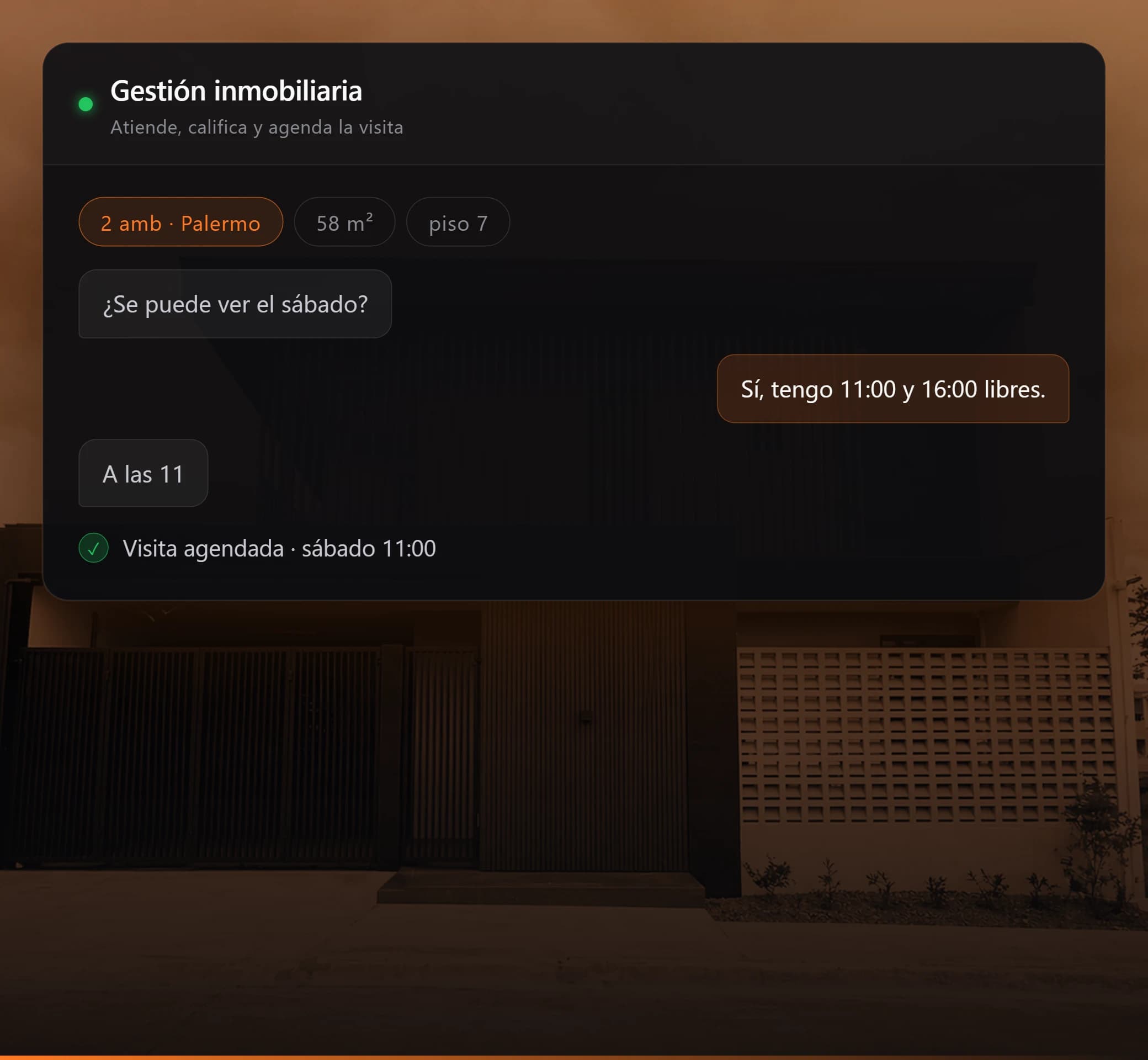
- 🏢 Ben & Fulcher agent (management): flows to check unit availability, schedule visits (connecting to the CRM agent), and manage contracts and renewals (connecting to the Ava agent).
- 🛠️ Alex agent (operations): flows implementing a support ticket system. Residents can create and view their tickets; admins manage them all (full CRUD).
- ⚡️ Ava agent (execution): non-conversational "backend" flows triggered by other agents. Uses PDF generation and email nodes to create and send invoices and contracts automatically.
- 💰 Rico agent (finance): a set of secure flows, accessible only to the Admin role, for CRUD operations on balances and financial data in the database.
- 📬 CRM agent: flows that integrate with calendar APIs (scheduling visits/maintenance) and contact APIs (managing the user database).
-
Proactive system (webhooks and cron):
- n8n
Cronnodes trigger scheduled jobs, like the Ava agent's flow for automatic monthly invoicing. - Workflows use
HTTP Requestto send webhooks to external systems (e.g. notifying a Slack channel) when key events happen (new support ticket, payment recorded).
- n8n
Outcomes
- Business process automation (BPA): complex real estate processes automated end to end, drastically reducing manual workload.
- AI orchestration (AIOps): a working multi-agent AI system built with n8n as the central orchestration platform.
- Scalable architecture (AI SaaS): the role-based workflow design lays the groundwork for a secure, scalable multi-tenant SaaS platform, with business logic and permissions centralized in the automation backend.
- Development efficiency: n8n's low-code approach made it possible to build a complex backend quickly and efficiently, focusing effort on integration and business logic.
Related solutions
- AI phone agent for real estate — answer inquiries 24/7, qualify buyers and book viewings.
- Real estate automation — capture portal leads, push them into the CRM and pre-qualify them with AI.